
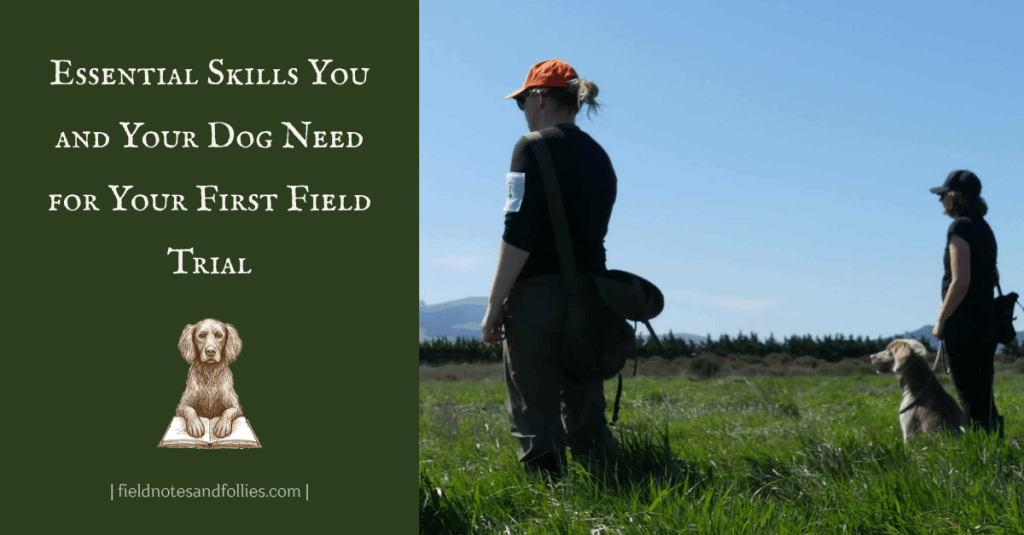
Hail and I didn’t enter field trials for quite some time after we started training in field sports. This was partly a confidence thing for me, but it was also because Hail didn’t quite have a handle on all of the key skills needed to complete a Novice trial.
When we finally entered our first trial, we were hopeless! I was completely confused because we had the skills on a Monday night training on the rugby fields at our club, but they really didn’t seem to transfer well to the field.
It took months, and I mean months… possibly even a full year, before Hail and I even managed to successfully complete a Novice trial. We had all the issues be it getting disqualified for munching birds, running out of time, or failing to find all the birds at all! It was grueling and there was more than one occasion where I wondered if there was any point in carrying on…
I’ve heard similar conversations echoed by some of the newer members of our club. So I thought, off the back of my last post pointing out how difficult things are; perhaps it’s time to offer a bit of guidance… What skills should you try to have sorted before stepping up to the peg for the first time?
Functional Heelwork
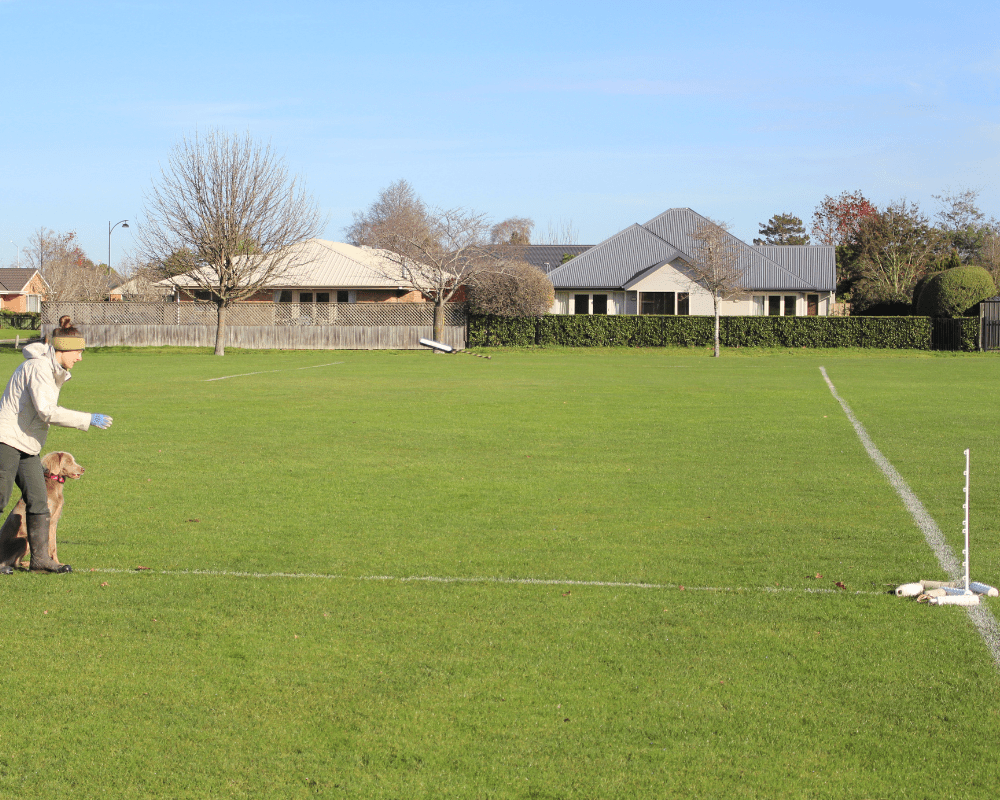
Dogs are great readers of context. They will very quickly work out that the pegs mean they are about to get some bird work, and this can make even a few meters of off-lead heelwork a challenge.
Before entering your first trial, you should have confidence that your dog can manage a good 30 meters of off-lead heeling, with plenty of distractions. While it will be difficult to recreate the exact hype of a proper trial, there are a few tricks you can try. You can rev them up by throwing a toy near them as they walk past, leave out some distracting treats or even have a few birds lying on the ground that they need to be able to ignore as they stay in line at your leg.
Its really hard to line a dog up for their marks if they’re a good five paces in front of you. This one is worth putting in the effort for as it sets you up for a clam start to your run.
Steadiness to Shot
Once the dog has walked to heel from the first peg to the second, the next things that will happen is the bird (which is a dead bird) will be flung from its launcher with a shot to simulate a hunting experience. The dog is expected to stay seated at your side until the judge says “send your dog”.
This momentary pause is important because it gives the dog time to see where the bird landed (see more in the next paragraph). The dog should be alert, but they should not move until they are sent by their handler. Sounds easy? It’s not!
A ‘break’ – when the dog self-releases, costs you a lot of points on your score card, so it’s important to have confidence that your dog isn’t going to take matters into their own hands once the bang goes off. Again, this should be practiced with lots of distractions before heading into the field, as the trial environment will only exacerbate any breaking problems you have – trust me!
Marking
In order to go and retrieve the bird, your dog is going to need to have developed their marking skills. This means that they can watch the path of ‘flight’ that the bird takes (from the launcher) and pinpoint where it lands.
A good marking dog will look out into the field before the bird is launched, they will track the path of the bird as it moves through the air and they will stay ‘locked on’ to the place where it came down. During this time they are taking mental notes about where that bird is in relation to other environmental features in the field. A dog that has good marking skills will make short work of running out and picking up the bird because they are confident they know its exact location.
A dog with poor marking skills might do things like look away or look around before the bird is launched and as the bird is moving through the air. They might only take a quick look once the bird is down, before looking somewhere else, meaning that they have less time to take a mental picture of the fall area. Once sent for the bird, a dog that has marked poorly will often start hunting (put their nose down) well before the fall area, or, they might end up in completely the wrong area. This takes time, and points, off your run that you might need for other birds.
Again, practicing single marks is a great way to improve this skill. Always start these in short grass, with white bumpers and keep the distance of the retrieves short. This makes it easy for the dog to find the bumpers if they mismark while they are in the learning phase.
As the dog becomes more proficient you can increase the distance. Once they have a good retrieve at 50 meters or so, you could take them to an area with slightly more cover, but you would shorten up the distance and work your way out again. It sounds a bit painful, but it’s a skill you can’t afford to skip because the longer the dog is running around like a headless chook, the fewer points you’ll have left on that score card.
Delivery
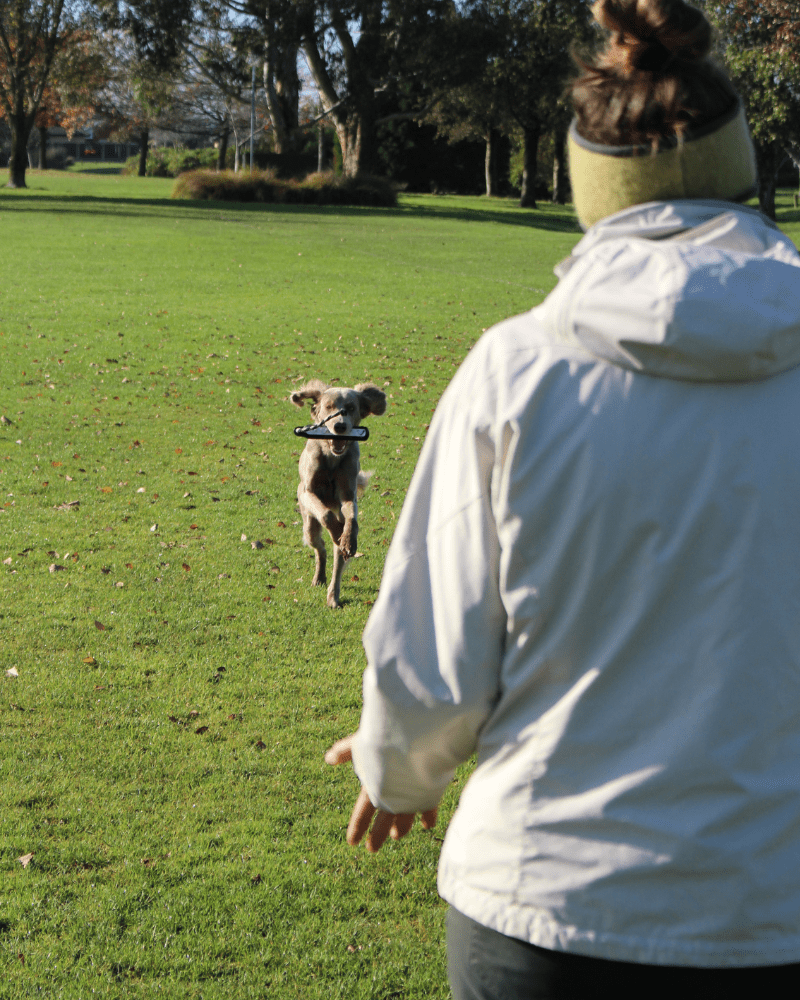
Ah! My nemesis! I feel like a bit of a hypocrite here because deliveries are something I have struggled with since day dot… Poor deliveries have cost me more points, tears, and disqualifications than any other aspect of the single marked retrieve. All of which could have been avoided if I’d have put the work into teaching them properly in the first place.
I won’t pretend to be an expert, but these are the things I know are important, even if we are still in the learning phase. You need your deliveries to be a pressure-free space, like completely! If you find that your dog is dropping the bird, reluctant to bring it back to you, munching the bird on the way home or holding on to the bird a little too long, chances are you have inadvertently created pressure somewhere in the teaching sequence.
Welcome to my dilemma! Finding out where that pressure has come from could be something as simple as remembering to stand upright as the dog gets close to you. Bending down creates pressure, so if you’re lucky it’s an easy fix. If like me, it was because you’ve aimed for perfection and made giving things back to you less than enjoyable for your dog, you’ve likely got a bit of repair work ahead of you.
Ability to Work Through Cover
Cover from a trialing perspective is any obstacle, usually vegetation like tussock or brambles, that a dog might have to run through to get to the bird.
Teaching your dog to run through cover, rather than around it, requires you to start small and work your way up… much like most things in gundog training, really. When you start out, choose cover that isn’t too long or dense, and start by just throwing your bumpers on the edge of it. Slowly work your way so the dog is moving into the cover and eventually you’ll get to the point where you can thrown the bumper through or over a decent patch of cover. Your dog should punch straight through it and come back along the same line.
Exposure is the key here, so seek out every opportunity to practice in a variety of locations.
Water Work
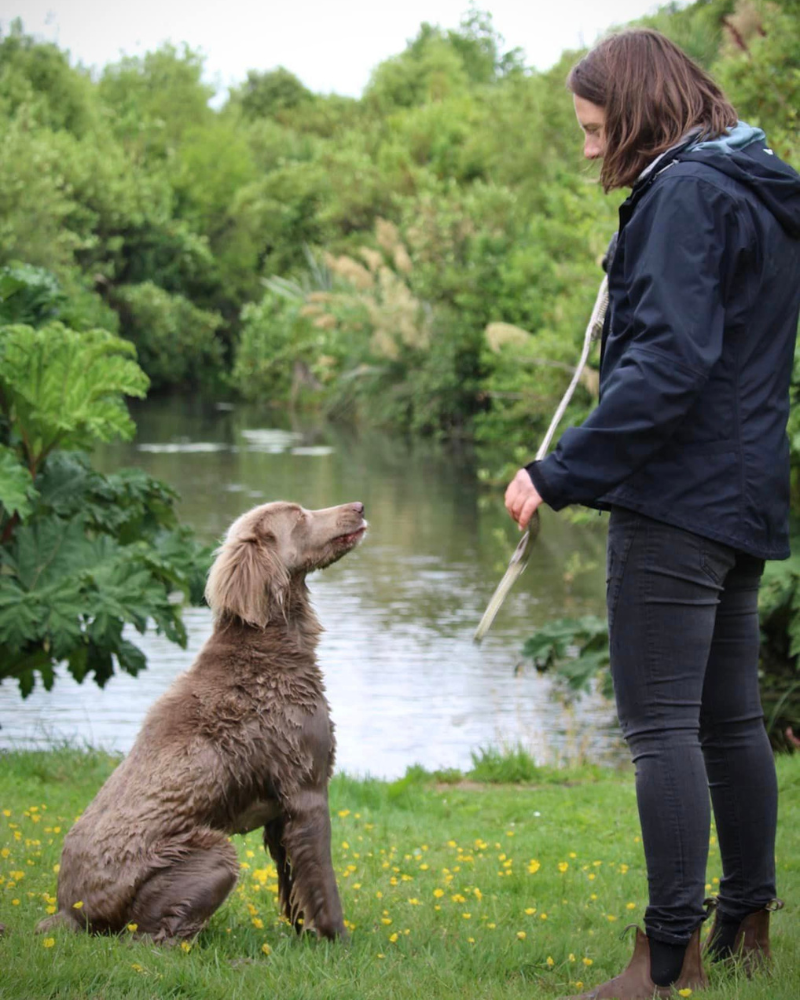
Hail getting more exposure to water.
Here in New Zealand, we have both a land and a water section for our field trial events. This means that even Novice dogs are expected to retrieve across water.
If you’ve worked on all of the above skills, applying them in the context of water is very similar. The two things you need to practice when it comes to water work is teaching your dog to get in, and then teaching them to get out without shaking until they have given you the bird.
The getting in bit really just comes from exposing them to water as often as you can. This is best done during the summer months when the water is more inviting. If you have a reluctant swimmer, you can either encourage them to get in by joining them yourself or, my preferred method, is take them to water with another water-loving dog and let the excitement get the better of them.
The getting out without shaking requires a little more training. Start by throwing a bumper in a little way so that your dog goes in and swims. Then stand right at the waters edge and exchange the bumper for a treat before the dog has the opportunity to shake and drop the bumper. Then, all you need to do is slowly work your way back from the waters edge each time, rewarding the dog for coming to you first, only shaking once you have taken delivery.
A dropped bird isn’t the end of the world, provided that you don’t pick it up off the ground, but it does take points that you’d rather hang on to. I have always found that Hail’s land birds are much tidier than her water birds, but that isn’t the same for everyone. Also not surprising given that she isn’t exactly bred to be a water specialist.
Final Words…
As I mentioned in my post Why Gundog Trials Aren’t Like Other Dog Sports -And That’s Okay, getting into field sports, even at a Novice level, demands a complex set of skills and the learning curve is steep! You can have all the skills sorted in the short grass, but the second you take it to the long grass everything can fall over in a heartbeat.
It’s important to remember is that your dog will do a lot of learning on the peg. That said, you also don’t want to be putting them into situations that are vastly beyond their skill level. It’s a fine balance between building confidence and presenting a challenge, for both you and the dog.
At training we talk about 80%. If you’re dog is getting things right about 80% of the time, we can be fairly confident that they understand the behaviour and they are ready to be challenged some more. I’d say the same for knowing when you’re ready for your first trial. If the dog can do all of the skills, in the long grass, to about 80%, you have a pretty good shot of seeing some form of success in the field.
And if you’re not there yet? There is no shame in being realistic about your dogs skills or performance. There is not set timeframe for when your dog should be ready to compete. Each dog learns at their own pace, which can be immensely frustrating at times. As handlers, we need to remember to work to the speed of our dogs because they are more than forgiving when we don’t get things right the first (or 50th) time!
I hope that this overview of Novice skills provides some insight for those of you who are starting out and possibly feeling frustrated that it isn’t all coming together just yet. The key is patience.
Whether you’ve just started trialing, you’re thinking about getting into it, or you’ve been around the peg a few times, I hope this post helps you feel a little more grounded in the process.
If you’re not sure where to start, pick just one skill from this list to focus on this week — and know that you’re not behind, you’re just on your own timeline.
I’d love to hear what you’re working on at the moment. Feel free to share in the comments or tag me on Instagram [@fieldnoteandfollies].

 Field Notes & Follies
Leave a comment