
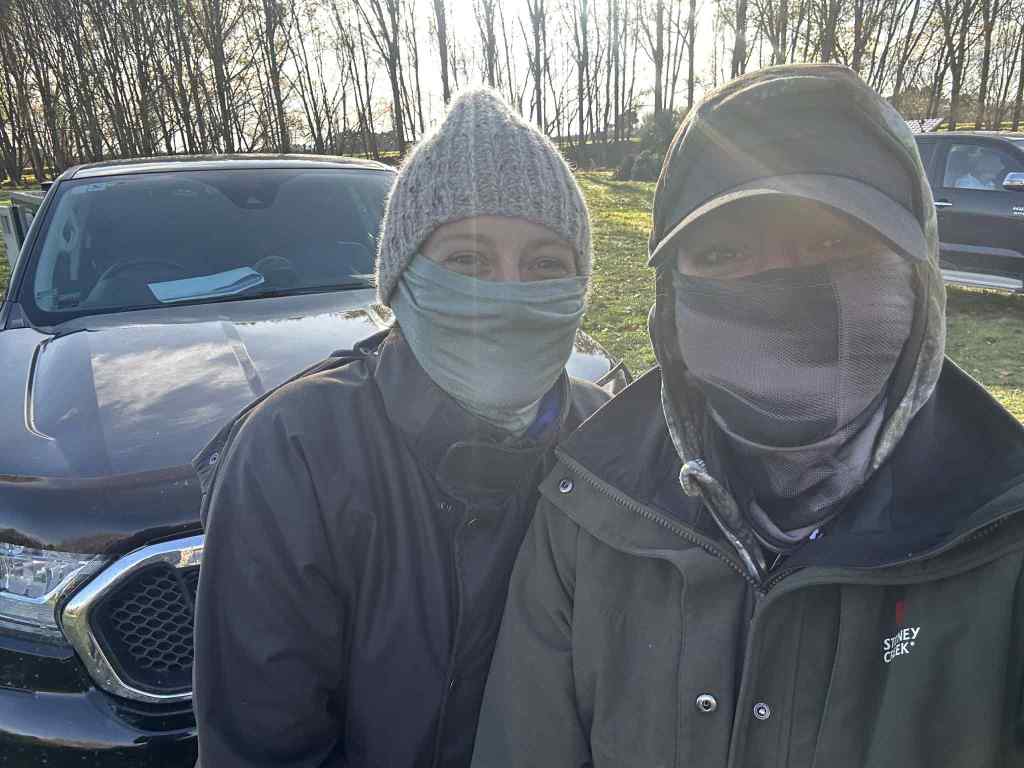
Let’s be honest, training dogs through the winter is miserable. The lack of daylight makes planning any sort of after-work training session a logistical nightmare… Not to mention, if you are brave enough to venture outside, it’s cold, dark and wet. This means months of dry, cracked hands, frozen fingertips and ears, and more muddy washing than you can shake a stick at! I would like to share what I believe are six essentials every gundog handler needs for training through winter.
What’s interesting about this list is that most of the items on it are small, inexpensive and easy to obtain – there are enough aspects of gundog training that are complicated, so let’s not add to that list. What I’ve also noticed about these items is that they have a disproportionate influence on my happiness when I’m training… In short, I really know when I’ve messed up left one at home!
Disclaimer: All of these items are ‘field tested’ by me personally. I’m not on commission and I’ve paid for each of them with my own money. So, this list only includes items that genuinely make a difference for me.
1. Lip Balm
While we do get some stunning, sunny (but cold) winter days here in Canterbury, the weather down here is windy more often than not. I find that these are the perfect conditions for chapped lips. I’m not just talking about a little bit of a rough edge type stuff. I’m taking, so dry that they crack and bleed when I smile or talk type of lips… very unpleasant!
Over the years, I’ve experimented with all sorts of lip balms to try an help fix this issue. What I’ve realised is that not all lip balms are created equal. Some are really thick and sticky, which is no good for flyaway hairs (dog or human) in the wind. Others smell great but add very little moisture under harsh conditions and require constant reapplication… too much admin for me when my hands are covered in slobber or bird ick. But by far the biggest issue I’ve found, is that most lip balms don’t have an SPF rating of more than about 15 – 20. This just isn’t protective enough for our level high of UV radiation down here in New Zealand. I spend a lot of time outdoors so I want to know that I’m protecting myself as best as I can.
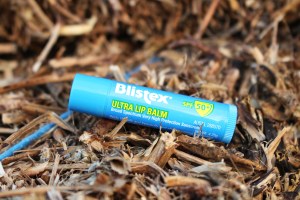
Not all hope is lost! A few years ago, I stumbled across Blistex Ultra Lip Balm (50 SPF+). What I like about this one is it it’s got the highest SPF rating I can find without having to purchase online. This means that I can usually find one at a petrol station or supermarket if I’m travelling and get caught without. Such a high SPF also means that I can use the same lip balm all year round without having to buy a different one for summer. It’s got a pleasant subtle fragrance of vanilla and coconut. It applies evenly and has good coverage without being sticky or thick.
All up, it’s cheap, its convenient and it saves me owning multiple items that do similar things. A winner in my book!
2. Hand Cream
The drier air in winter wrecks havoc on more than just my lips – my hands pay the price too. The air, combined with the fact that I am forever washing my hands at work to avoid bringing the school lurgies home only compounds the issue. While I’m certainly not willing to forgo the hand washing, I’ve found that the right hand cream can help me to combat the moisture loss.
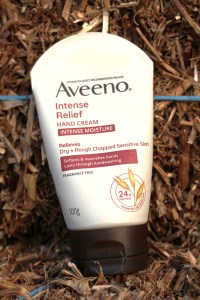
As with lip balms, there is a lot of variety in the market of hand creams. I have one clear criteria that cannot be compromised on. A good hand cream must be quickly and effectively absorbed into my skin. Imagine this, you have applied your hand cream ten minutes before starting a training session in preparation for the cold that you know is coming. You start the session, your dog brings you a wet bumper or comes in to take a treat and touches your hands. Suddenly, your hands feel like they’ve somehow secreted all that lotions back onto their surface and now your hands are slipperier that an oil slick! You drop the bumper, the dog refuses the treat because it too is now covered in this goop. You can’t even wipe it off on your clothes because its now this wallpaper paste of dog saliva and lotion. Disaster! And also totally not a made up scenario.
Anyway, the solution? Recommended to me by a nurse (a fellow excessive hand-washer) is Aveeno Intensive Relief Hand Cream. This stuff is magic! It absorbs in seconds. It isn’t greasy and I can get my hands wet again within minutes of applying it with no ill effects. It’s a little more pricey than some of the other hand creams available at the supermarket, but still easily found for under $20 NZD. Champion!
3. Gardening Gloves
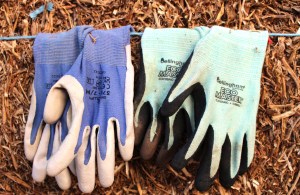
Despite the fact that I have been training dogs in some capacity for well over half of my life I still can’t stand the feeling of dog saliva on my skin! Gloves also reduce my hands exposure to the wet and cold, further reducing the need for as frequent hand washing, while also extending the effectiveness of my hand cream.
I know that gloves aren’t probably a revolutionary item for a winter training list but regular outdoor gloves don’t really stack up in my books when it comes to dog training. Yes, there are some exceptionally cool technical fabrics out there that would make fantastic dog training gloves, but they also come with an exceptional price tag! I also find that lots of outdoor gloves intended for hiking or skiing are too bulky and don’t give me enough sensation in my fingers when trying to reach into my treat pouch or unclip a lead.
A few years back, a friend of mine, who is heavily involved in all things equestrian, mentioned to me that she uses gardening gloves when she’s doing her feeding out and tacking up in winter. I was a bit surprised as I didn’t think they would provide much protection from the cold or be very comfortable to wear. Turns out, she was on to something!
While I’ll admit they aren’t going to give you the same thermal protection as ‘proper’ gloves, they do give greater sensation for the fine motor skills that dog training training often requires. Most have a rubber palm and finders so they also don’t hold moisture or become waterlogged like more traditional gloves. This is all too important when receiving wet bumpers and dribbly dog noses out in the field. Added to that; they’re easy to wash, dry in a flash and are cheap as chips!
I haven’t found a particular brand that I’m 100% smitten with yet but it’s easy enough to pop into a local hardware store and try on a few pairs to see what works for you. They often come in a range of colours, varying thicknesses and materials so you can find something that suits your preferences on all fronts. Most cost around $10 – 20 NZD for a pretty decent pair. I have a few pairs that float around and get used for dog training and mucking about in the garden. They have lasted me a good few years although I’m probably due a replacement pair soon. Not a bad investment.
4. Winter Headbands
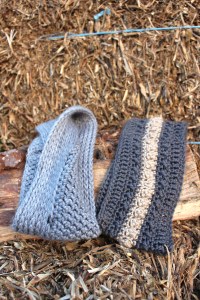
I hate being cold, so I’m often rugged up like the Michelin Man when I’m out training. Layers, head to toe, are important for keeping warm – your ears are no exception!
Knitted or fleece headbands have been a key piece of kit for me for as long as I can remember. I used to have very long hair, like, could tuck it into my belt long! So, beanies weren’t a comfortable option, especially if I wanted to have my hair tied up. Then I found headbands and my cold little ears were saved!
You absolutely could use a beanie in the same way, so whatever your preference, just make sure those ears are rugged up! For me, cold ears lead to all sorts of issues such as ear ache, headaches, jaw pain and grouchiness. None of that is helpful for training the dog, so it’s to be avoided at all costs.
If you find knitwear too itchy you can find headbands that are fleece lined or made fully of fleece. I tend to find these charge me with too much static, but again, it’s dealers choice. They are easily and cheaply available online, but you might have a talented person in your life that would love the opportunity to make one for you? Most of mine have been made by a wonderful teacher aid we have at school and I think of her every time I wear them.
5. Wellies/Gumboots
Now, this is the one exception to my relatively cheap claim at the start of this post… and this is because I am a firm believer in ‘buy once, buy right’. I also think that having wet feet is no joke… if you know, you know!
I’ve tried traditional wellies (think the rubber boots with no insulation) and the half rubber – half neoprene gumboots. Both have their merits but I found in both cases they split at the sides of my feet, just behind my toes, within a year. I also discovered, the hard way, that the neoprene part of the boot is not as waterproof as you would expect. Needless to say, when they died the death, I wanted to replace them with something that was going to go the distance so that Hail and I could too.

My current gumboots, the Skellerup Quatro Knee Gumboots, are exceptional! I have had them for around two years so far and they have no signs of wear and tear. These are by far the best pair I’ve ever owned. My brother, who works outside as an environmental contractor, has the same boots. He wears his everyday and also swears by them. At around $200 NZD I still think these are a steal!
They have a thick sole, so they offer great protection from rising cold when standing out in a muddy field. They are fully insulated, so even on the bleakest of days, your feet are snug and dry. The rubber they’re made from is sturdy and as of yet, shows no sighs of cracking or perishing in the usual places that you’d expect. They are probably a little heavier on my feet that the other boots, but it’s not drastically noticeable so I just think about the extra glute workout that I’m getting without having to go anywhere near a gym!
6. Wet Weather Hat
I want to preface this item by saying you can absolutely do without this item… but I don’t know why you’d want to! If you have a rain coat with a hood, you might think this item is a bit of a have. Well, how many times have you had people shouting at you to get your attention or ended up being clipped in the back of the knee by a dog doing warp speed because you didn’t hear them coming from under your hood?
Exactly! So, a leather, wide-brimmed hat is a must for me. I’m already a little hard of hearing – I blame the years of being trapped in noisy classrooms with the youths. Bloody youths!
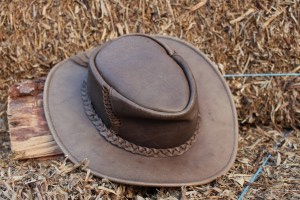
Anyway, my leather hat not only allows me to hear what’s going on around me when its raining, but unlike hoods which often let the rain seep in at the side after a while, my hat keeps the rain out properly. I don’t get drips run down my neck into all my other layers, and if I’m wearing glasses or have a buff on, they stay dry too.
I also happen to think it looks pretty stylish… always a key consideration when I’m heading out into the middle of nowhere to stand in a field with my dog, ha!
My hat is a bit of a relic. I bought it over 10 years ago when I lived a different life as a zookeeper/zoo school educator. I think this also shows just how durable and low maintenance they are. After all this time, it is still as functional as they day I bought it. Once in a blue moon it requires the odd condition with a leather treatment. I even managed to shrink it by leaving it to dry too quickly in the hot interior of the car. Whoops! It was no trouble. I simply left it out in a light bit of drizzle, managed to squeeze it back onto my head for the day while out at a trial and packed it with scrunched up newspaper as is dried that evening in the laundry. She’s a beaut, and I wouldn’t be without her!
Final Words…
Great winter training starts with having the right gear for the occasion. While clothing choice is important (another topic for another day), it’s often the little things that have the biggest impact on the enjoyment of our training sessions. Especially if the conditions are tough.
I want to make it clear that I’m not advocating for people to go out and spend a fortune on gear. My hope is that you likely have some of these items, or variations of, at home. Use them until they run out, or wear out and upgrade slowly and intentionally. If you do feel compelled to start upgrading your winter kit today, start with the item that you think is going to make the biggest difference to you and go from there. Remember, it has taken me a number of years to refine what works for me, so there’s no rush. Each item you add will improve things in increments, and sometimes having battled through makes the moment you upgrade all the more sweeter.
I hope that this post of my field tested six winter essentials every dog handler needs at least gives you a place to start when thinging about your own must-haves for winter training.
Let us know what your essential items you couldn’t live without in winter are. Feel free to tag us on Instagram @fieldnotesandfollies or share them with us in the comments below.






Leave a comment