
I don’t know about you, but I hate feeling like I’m muddling through life without having at least a bit of a plan. For me, organisation provides comfort. As a practicing essentialist, this theme runs through most aspects of my life. It makes sense then, that I have felt great shame that this ethos was not flowing through into my dog life, too.
For a long time, I thought I was training pretty consistently – until I looked back and realised I’d been training the same drill for the last two weeks without seeing any improvement! This sparked a pretty frank conversation with my mentor about my training progression… or rightly put, my lack of.
While conversations like this one can be confronting, they offer me great insights into the aspects of my personality that can make me a great dog trainer, or those that could break me as a dog trainer. Once I sat down with a cuppa, and reflected on what had been said, I realised that this touched a nerve for me because I am a bit of a fearful dog trainer… I’m not fearful in the sense that I’m frightened of my dog or what we do, but I am fearful of making mistakes. I often have slower progress than my peers because I hold my dog (and myself) back to ensure that we the skill down 100%, when 80% should be the goal.
The problem was, I hadn’t been tracking my training sessions at all. Were we even tracking at 80%? I couldn’t tell you! I had no progression plan to guide me in the right direction or to keep us on track. I had no post-training session notes to reflect on so that each session could be meaningful and pitched at the right level. And, aside from a rough, anecdotal vibe, I had no idea what level of success we were sitting at for any of the skills we were working on. Looking back, I was flying blind – no notes, no benchmarks and no clear sense of whether we were improving.
Something needed to be done. I needed to get back to training with intention again. There was only one thing for it. I had to start tracking my training sessions.
Why I Started Tracking
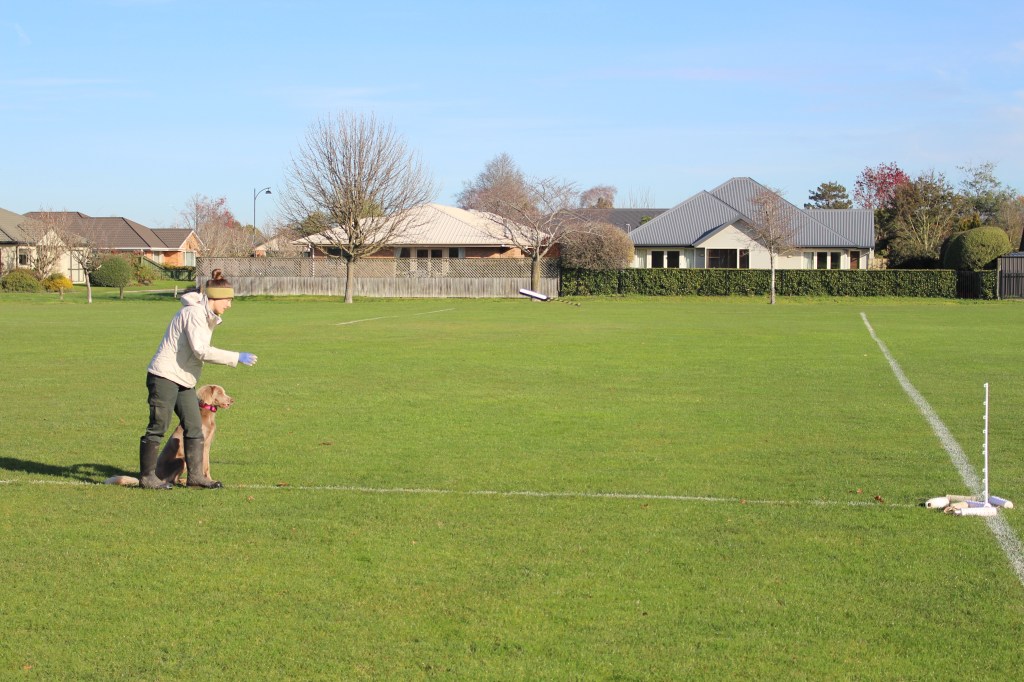
Lining to the pile… That’s what started this whole thing. I’d been working through a training program, and Hail and I were just getting bogged down by this one drill. I don’t think it was a flaw in this training program, or a problem with the dog. It’s just another example of how unique dogs are, and what works for one, won’t work for another. We’d been lining to the pile for ages. We kept having a go, getting stuck, and restarting. This went on for months! I couldn’t figure out what was going on – because I didn’t have any clear notes or evidence to analyse.
I wasn’t completely clueless. I had briefly reviewed the programs notes, but I hadn’t made the effort to put them into my own language or organise them into my own thoughts. Because I hadn’t personalised this for me and my dog, I fell into the trap of glossing over the subtle signs my dog was giving me that this method wasn’t working for her. Combined, this meant that I had no idea why the training sessions weren’t working, all I could tell you is that they weren’t.
What I Actually Tracked

This prompted me to get serious and start actively tracking our training sessions. I wanted to keep this as detailed as possible without becoming overwhelming. I’m a busy person, and I don’t always find time to write super detailed blow-by-blow notes about every bit of training I do.
I started simple with things like the goal or focus for the session and the success criteria that I would need to see in order to know that I was making progress. I also wanted to keep an eye on things like Hail’s attitude and effort as this was the first thing that took a dive in our previous training sessions with lining to the pile. I also found it helpful to make notes about my handling ability on the day, too. Was I doing a good job, or was my shoddy handling getting in the way of the dog achieving her potential – as has been the case on more than one occasion, if I’m honest.
What I Learnt
Taking reflective notes about my training sessions allowed me to plan my next session with more purpose. I could see where I had gotten up to, and that easily guided me to the logical start point of the next session. This naturally progressed into being able to think about a whole weeks worth of training, rather than living every day in isolation. Anyone who make meal plans, or does weekly food preps knows how valuable this sort of batch thinking is. It eliminates a whole weeks worth of daily decisions – a valuable process to avoiding decision fatigue.
Tracking our progress also gave me the ability to recognise patterns in Hail’s behaviours, training progress and in my own skills as a handler. I quickly learnt that I am, and feel, more capable as a handler at certain times of the day. I know that I have more mental capacity for training at the weekends, when I’m not fried after work and rushing to beat the daylight. I also saw that there was a correlation between Hails attitude or effort and my competency as a handler. This is probably not a huge surprise to anyone, but it makes me check in with myself before every training session now.
What surprised me the most was how much more quickly we began to progress once I started taking, even brief, notes on our sessions. I didn’t realise just how slow our progress had been until I started tracking our sessions and planning ahead. She was picking up skills much faster that I had previously given her credit for and we had fewer plateaus when things did get a little sticky.
The Unexpected Benefits
There were a few unexpected benefits that happened as a result of this process that I hadn’t foreseen.
My motivation to get out training was back! I thought I’d lost my mojo when our lining to the pile wasn’t working. As it turns out, I just needed to have a clearer plan to give me the confidence to tackle the problem in manageable bites.
Tracking also made me accountable for my training sessions. I couldn’t claim that I was lost or confused by the process anymore, which had been previous excuses that I’d made for our lack of progression. I was now in the drivers seat, making my own decisions around what the focus of the day was, at my dogs pace, not at someone else’s.
What this boils down to is having the confidence to train with purpose. When you’re motivated and you feel like you have attainable goals you approach your training in a completely different way. This travels down the lead to the dog. They can sense you have a plan, that you’re in control. You handle with confidence, which gives your dog confidence.
How I Track Now

Dog training needs to be sustainable for it to be achievable. As I’ve alluded to before, life’s too short to spend all evening writing plans and training notes. Like many of you, I work full-time, and my evenings are for spending time with my nearest and dearest and actually training my dogs. That’s why I do my planning sessions once a week, with a short five minute review after each training session. This enables me to see if there are things that might need adjusting as the week goes on. Some days you’ll progress in leaps and bounds, and other days things might stagnate. That’s ok, it’s all part of the process, but you need to make allowances for that as the week goes on.
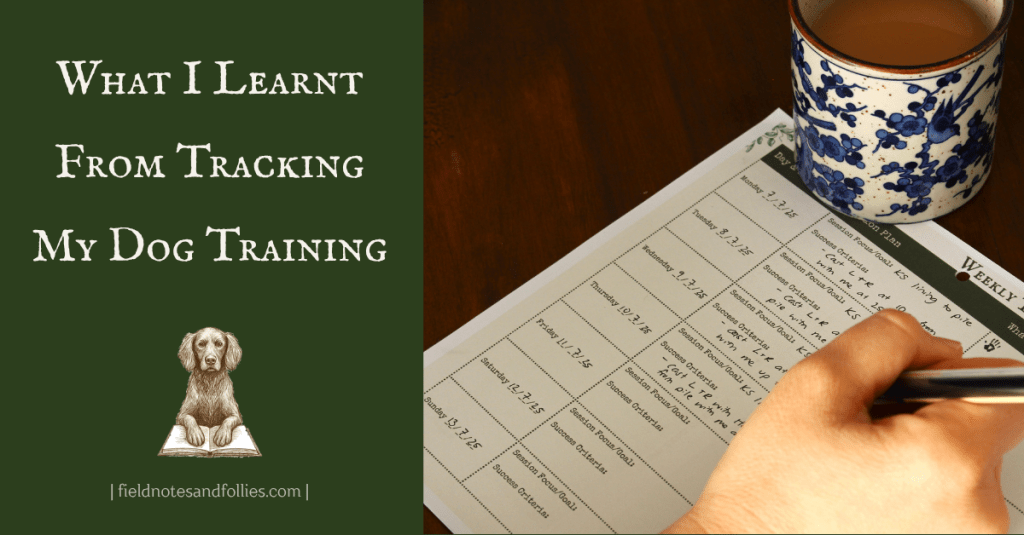
When I started this process, I would haphazardly scribble down my training notes in a half-used notebook – sometimes on the wrong page. This got pretty chaotic, fairly quickly. The teacher in me saw an opportunity (and you know that I just couldn’t help myself). So I ended up developing a set of Weekly Training Planner and Reflection Sheets that helped me bring some structure to the chaos – just enough to stay on track without overcomplicating things.
They’re still evolving, but they’ve made a real difference for me. I’ll be sharing them soon in case they’re helpful for you too. If you’re keen to try it for yourself, I’ll be making it available soon here on the blog and in the shop (watch this space!).
Have you ever tracked your training? What did you learn – or what might you find out if you started?
Let us know in the comments, or share with a friend if you think they might benefit from a bit of friendly advice from one aspiring dog trainer to another.





Leave a comment