
As you might imagine, dog chat features quite heavily in my life.
Whether I’m negotiating talks around the in-home training of our long-haired Weimaraners with my partner, or listening to gundog podcasts in the car, or chatting about the latest retriever training techniques with my mates down at the pub, I often find that I am fully immersed in a wide range of dog discussion topics.
Hidden in amongst all the usual dog yarns, are a few golden threads that seem to appear time and time again. At first I didn’t pay much attention to them – I was too busy soaking up information on the latest training tool, getting sidetracked by one program or another, and drowning in the number of skills I apparently needed to teach to progress to the next thing! Gundog training seemed overwhelming – how did anyone ever find the time, or have a quiet enough mind in amongst all this noise, to be able to actually do the training?
Then I saw them… the little golden threads. These three things have made me a better dog trainer, without teaching my dog a single thing! Now that I implement routines, train only when I’m in the right mindset, and reflect on what’s working, and what’s not, I have seen progression in Hail like never before.
So here is my take on why these skills are so crucial to being a successful dog trainer, and how you could implement them too.
Routines

As an essentialist, I love a routine. A good routine reduces decisions. It’s one choice that takes away a thousand others – like, “When should I do my training session today?” Routines help us to cut through the distractions and focus on what really matters. They let us direct our energy toward the goals that matter most – the ones with the highest return on effort – including, of course, our dog training. To quote John C. Maxwell, “You’ll never change your life until you change something you do daily. The secret to your success is found in your daily routine.”
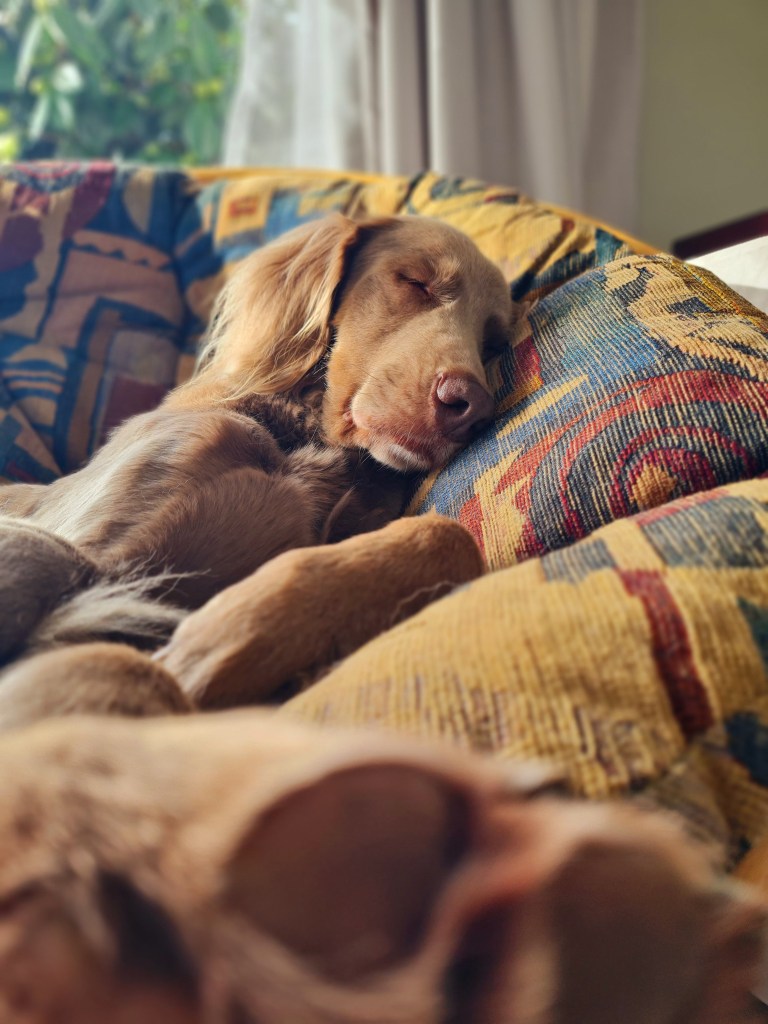
Changing my routine with my dog training has had a far bigger impact than I initially thought it would. After work, I’d often feel to grumpy and overwhelmed to train. I’d crash on the couch for about an hour and then really struggle to muster the enthusiasm, and energy, to get into a training session. I’d then begrudgingly drag myself out to the park, force myself through the session and I’d wonder why Hail’s attitude wasn’t as good as when I trained her on the weekend. Or worse, I’d hit the couch and that was that – no training, but all the guilts.
My Routine Reset
I know that it gets dark early in winter. I know that I’ll tap out for the evening once I’ve sat on the couch. And, I know that not training makes me feel like a terrible dog owner. So I know that sometimes, you have to do the hard things first. This shift was a game changer for me. My new routine is that I get home and to unpack from the school day I end up here, in the office, writing to you lot. Then, when Josh gets home from work, we throw on our warm gear, pack up the Weimaraners, and we head to the park before it gets too dark to train. This little shift has meant that there are very few days that I skip a training session. Instead, I show up with a clear head – and Hail shows up with a good attitude!
Routines have also had a significant impact on the youngest member of our pack, Zed. At the moment, we alternate houses, and this has caused a bit of confusion for the poor bugger. We have made some simple, but universal, routines for life at both places, and his behaviour has drastically improved over the last six months. He is learning to settle more quickly inside because he now has mandatory crate time after coming in from the garden, before being allowed to mingle with the other dogs. Again, a simple change to the routine has made all the difference.
Routines shouldn’t be complicated. After all, they are meant to make your life easier. They should therefore be designed with the most important elements of training and life at their heart. If you keep them simple, you’ll be more inclined to stick with them – and just watch how a good routine can lift your training game!
Mindset
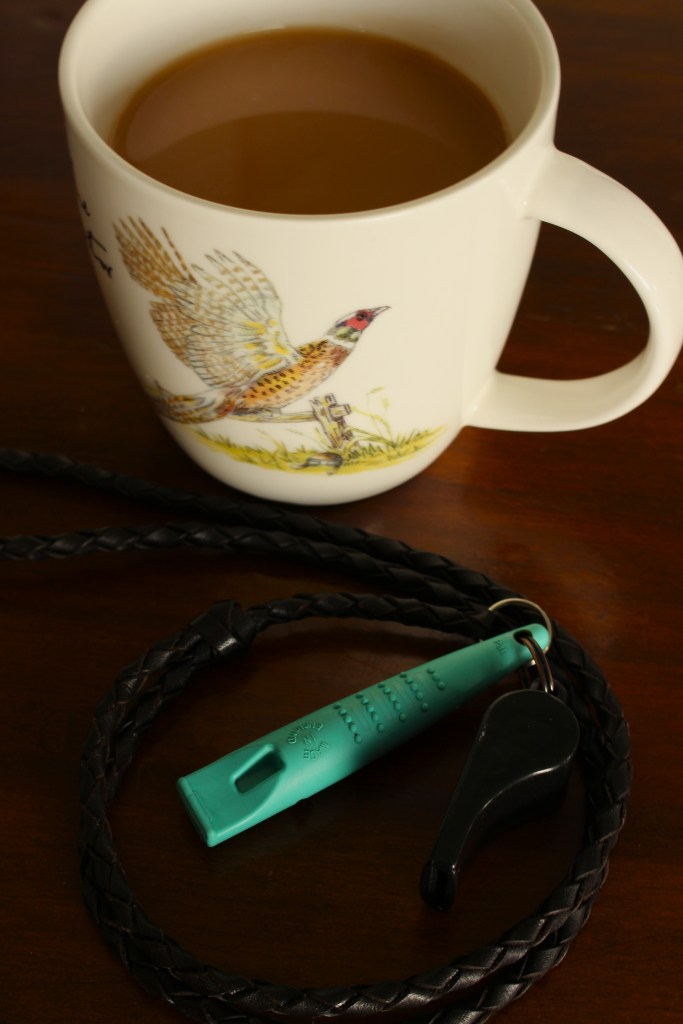
Once I’d created space for training in my schedule, I found that this created a bit more space mentally too. Training when we’re under pressure never usually ends well – for you or the dog. As handlers, we become easy to frustrate, which then means we inadvertently put unfair pressure on our dogs. This might be from our body language or from the tone we use when giving commands. These things might be quite subtle – so the next time you feel yourself losing it, take a moment to do a bit of a quick body scan and see where you’re feeling or expressing your frustrations.
It can be really hard to recover a training session once you’ve hit peak rage-monster, so it’s best to try and avoid getting to that point altogether. It could be that morning training sessions work best for you. You get your training done when you’re at your freshest, before the activities of the day have had time to wear you down. Or, it might be that, like me, you need a daily wind down activity first, before you hit the park. Whatever it is, find something that helps to shift your brain out of a frustrated or rushed mindset and into a slightly more relaxed state.
A Learning Mindset…
While I’ve just advocated for a calm mindset when training, it’s also crucial to remember that the brain learns best when it is slightly stressed. I won’t bore you with the finer details of how neuroplasticity works… unless you want me to? In which case, let me know in the comments and I’d be more than happy to oblige! But basically, the brain is more receptive to learning new skills, and learns them faster, when under the right kinds of cognitive stress. This is why it’s so important to challenge ourselves, and our dogs, during our training sessions. If you only ever work within your comfort zone, or the dogs comfort zone, they won’t advance their skills nearly as quickly as a those that push the envelope slightly in each of their training sessions.
I like to think of it like this. Effective dog trainers communicate calmly and clearly with their dogs. They keep emotional outbursts (excitement, frustration, etc.) out of the training equation. They challenge their dogs to progress, knowing when to push and when to back off. They use the right balance of praise and pressure to help guide or shape the dog’s behaviour so that the dog can receive its reward and seek its advantage. You can only be that trainer if you show up to every training session in the right headspace. And if you can’t show up like that, perhaps give yourself a break, and do something else with your dog instead. Forging ahead when you’re about to lose your head isn’t going to give you the outcomes you’re after – trust me!
Reflection
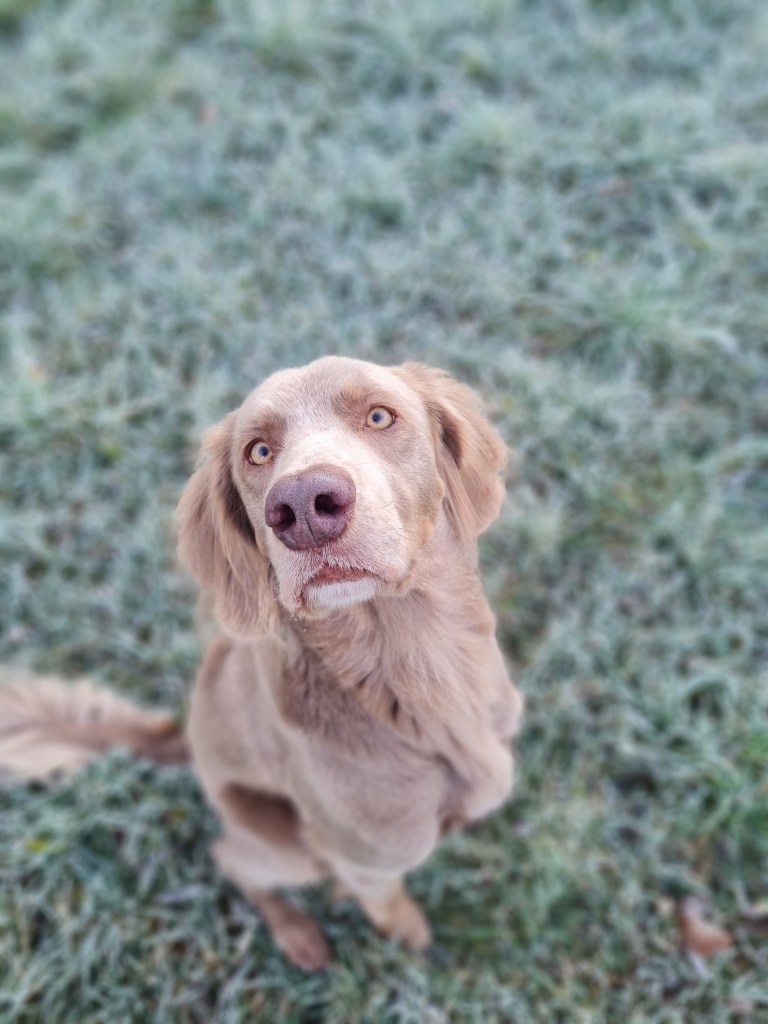
Something that has become increasingly obvious to me is that all of the best dog trainers I’ve met are masters of reflection. They’re able to analyse a dog, a training session, a handler, to whittle down the essences of a problem with ease. This ability to look beneath the surface of something gives them exceptional insights into how dogs think, how drills can be broken down, and how small changes in technique can give exponentially better results in a matter of minutes.
I don’t believe that these people think fundamentally differently to the rest of us. I think its a skill that they have spent year practicing. And we all know how experts make even the most challenging things look effortless.
Learning to Reflect
Reflection is something we could all benefit from improving within ourselves. Not just for our dog training endeavors, but as a life skill. It isn’t always an easy thing to do, so don’t expect to have it nailed after just a few sessions. I’ve been at this gundog thing for nearly four years, and I’m only just managing to successfully critique my own performance now. What I would suggest is to try doing it with a friend or mentor. Train together, and after a drill or failed attempt, try to unpack what you think is going on, together. Instead of letting them give you the answers, have a go at analysing the situation for yourself first.
If you have limited experience, and you’re completely new, this will be really hard – but that’s ok. As you gain more experience through showing up and giving it a go, or as you watch others and talk with them, you might start to notice patterns or repeating themes. Poor deliveries are a great example of this. Regardless of the unwanted behaviour being exhibited, whether the dog is munching the bird, dropping it at your feet, turning its head away as you go to take it from them, all indicate that the handler (whether they realise it or not) is creating pressure around the delivery. The more we practice any skill, reflection included, the better we get at it and the easier it becomes. And remember – our brains learn best under a little pressure, so if it feels uncomfortable, it’s probably doing you the world of good!
It’s All Connected
Routines, mindset and reflection are like a golden trifecta for me. As you’ve probably noticed, they are all interconnected. You can’t really have one without the others. If you don’t reflect on your dog training performance, you won’t be able to establish routines that can elevate your training. If you don’t establish routines, it can be difficult to get yourself in the right mindset for training each day. And if you aren’t in the right mindset for training, you might not notice the signs your dog is giving you that they don’t understand a task or that they’re ready to move on.
If I could only give one piece of advice to anyone starting out in this sport, it would be to focus on these three skills over everything else. You can overcome a lot of mistakes and failings if you learn to employ these three ideas into your everyday training early on.
If you think that tracking your training sessions might help you build better routines or reflect more purposefully, check out last week’s post where I shared what I learnt from tracking my dog training — chaos, clarity, and everything in between.
Do you agree with me? What skills made you a better dog trainer? How could you take these three ideas and adapt them to your own training situation?
Leave a comment or tag us on Instagram @fieldnotesandfollies to let us know what’s been working for you.






Leave a comment