
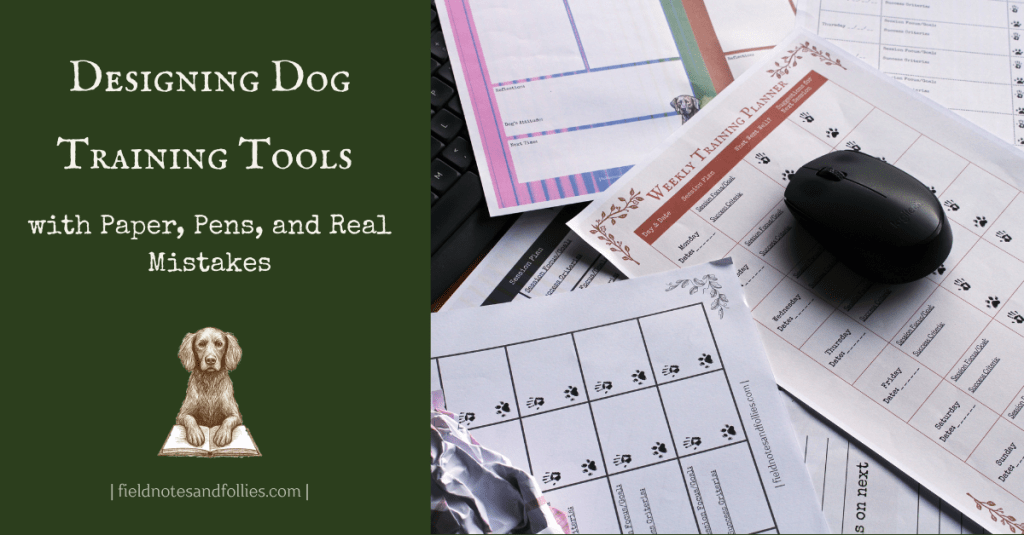
So, I’m going to be honest here… this was not the intention of building this blog. Originally I had this idea that I’d just like to document my training journey with Hail. I thought it’d be fun, provide a few giggles for people who wanted to follow along, and be a pretty cool thing for me to look back on in years to come.
As I started writing for the blog, I realised I was facing issues that I was sure other novice gundog handlers were probably experiencing too. While there are lots of excellent resources and programs out there that show you the drills and skills you need to teach the dog, I couldn’t really find anything to help me get my shit together as a handler. I knew what I needed to do, I just needed a system to help me put that knowledge into action.
Out of frustration, and many failed training sessions, I decided that I needed to have things written down in order to see any sort of success. And thus, the resources of Field Notes & Follies was born! While I’m not quite ready to share these with the world just yet, the resources seen in this post (and a few others that are waiting in the wings) will soon be available on Etsy, once they’ve passed their final field tests.
So, I thought I’d share the semi-organised, creative process of how my gundog training planners and guides are developed.
From Inception To Reality
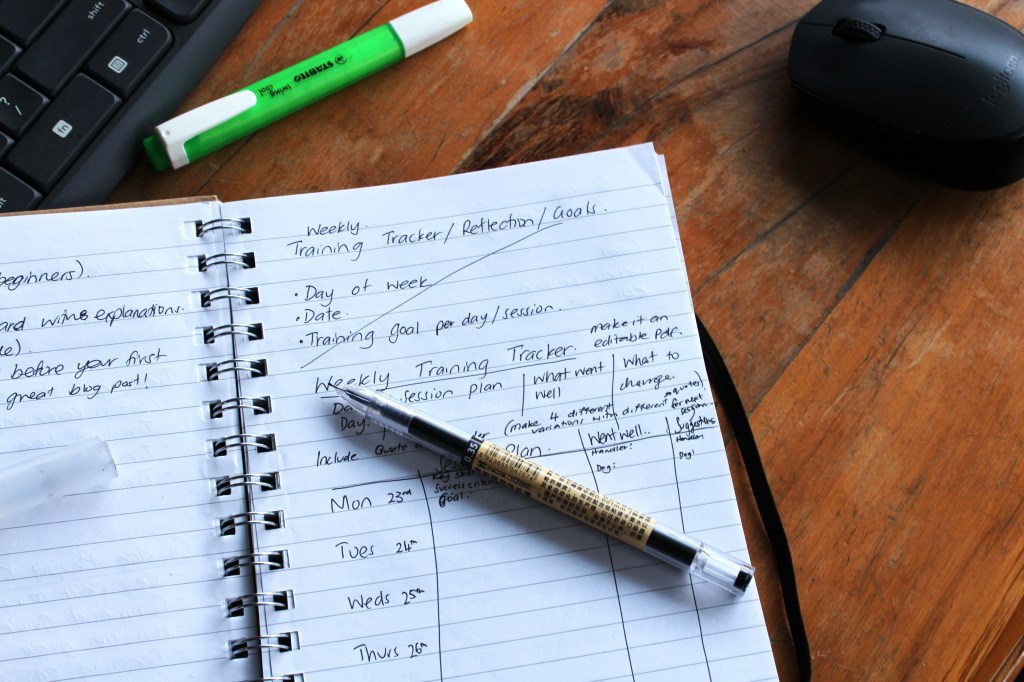
All of the resources I’ve made have come from a frustration I’ve had while training. If you read my post on why I quit training diaries, and why I came crawling back to them, you’ll know what I mean. When I’m out training, or life gets busy, I need a quick and painless solution to keeping track of things. Unfortunately, the process for creating these resources from scratch has been anything but quick and painless!
It starts with me being mad, usually muttering to myself, about how silly it is that I haven’t come up with a way of tracking x, y, z…
I then take time, lots of time, to consider the best way to track whatever metric it is. I explore the different options in my head, and in my journal… so I doodle, lots! I try to think about how one tool (planner or guide) could record multiple aspects of my training. Whether it should be something I use daily or weekly. Whether it should have prompts to direct my thoughts, or just have space to let my thinking run wild. From there, I test out different layout options.
The Resource Field Tests
Self Review
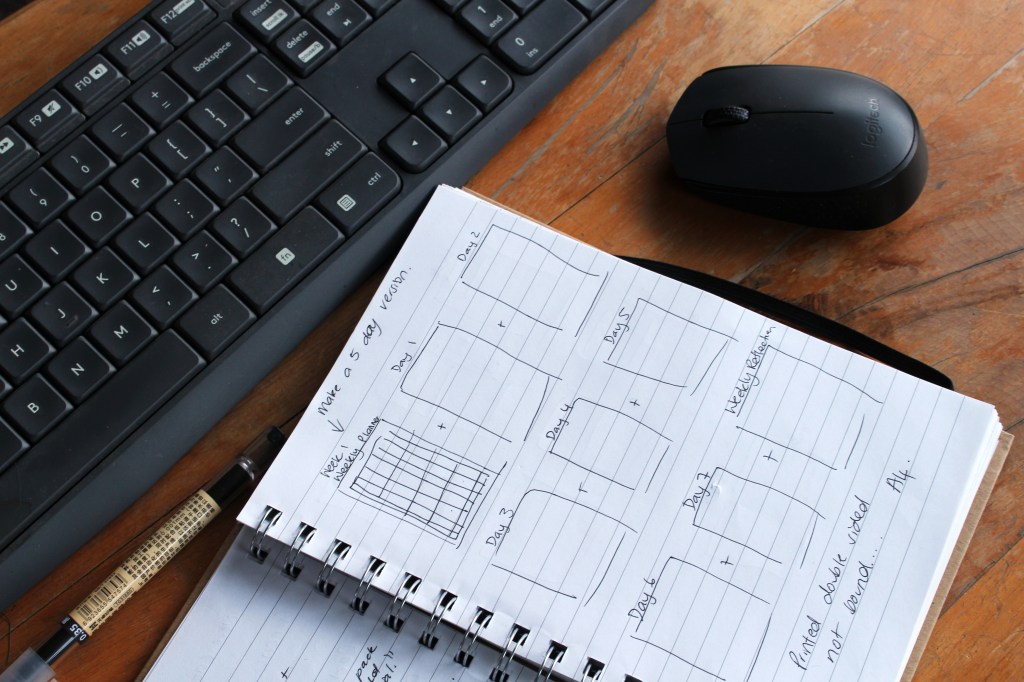
Once I have a rough idea of what I think it could look like, I need to try it out. Sometimes I’ll do this in a very raw form. I might simply mock up an idea on refill and see how it goes. I use it for a few sessions, and see if it flows. If I don’t like it, or there are things that just aren’t working, I go back to the drawing board and make adjustments. Then it’s back through the process until I am happy with it.
If it passes the first ‘Em test’, I’ll commit the time to making a printable version. This is the most time consuming part. I dread to think about how many hours I spent ironing out the kinks in the weekly planner… colour choices, layouts, font size, positioning of text… painful is an understatement. It went through several rather ugly iterations before I got to the version I’m using today.
After it’s been put in digital form, I try it out again. The second round of ‘Em testing’. How does it feel? Is it user friendly? If I’m happy with it, it moves to the next testing phase… the peer review!
Peer Review
This is where I get friends to have a play with it and tell me what they think. Friends are often the best critics because they’ll tell it to me straight. I am forever grateful for their time and feedback.
I’m lucky in that I have two excellent groups of people to review my resources. The first, are my teacher friends. Being organised is part of daily life for us, so their insights into if a planner or guide will work is often something I tap into pretty early in the peer-review phase. They point out things I overlook. Like initially I had three colours for the weekly planner until a friend pointed out that three was a silly idea, and four (to span a month) made much more sense. Amazing how sometimes you just can’t see the wood for the trees!
My gundog friends have also been excellent peer-reviewers, or more accurately put, field testers. They help me to evaluate the soundness of my resources from a practical perspective. They show me how other people, who didn’t make the resource, might use it. This tests things like whether the instructions I’ve sent with it are helpful, whether the layout works as well as I thought it did initially, or if the resource could be used in ways that I’d not intended but are equally useful.
After the feedback is in, I go back to the resource and make any final adjustments. If the field tests went well, it’ll be a few minor changes and she’s ready to go. If the field tests were a bit of a disaster, then I go back to the start and try again. A frustrating but necessary step.
When Do They Go On Etsy?
The old adage “good things take time” couldn’t be more true. Most of the resources I create take a minimum of a few months to put together. This is because I want the things I create to not just be useful, but to be the most useful. This isn’t a process I can hurry.
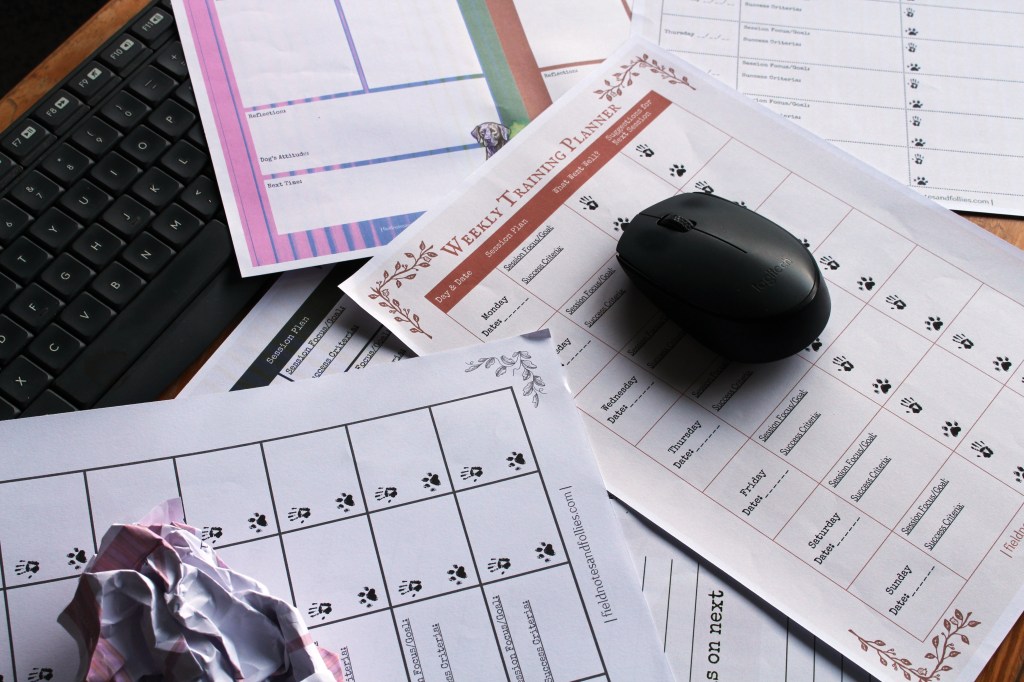
What I want to create are beautiful, intentional and helpful resources. My brain needs time to assess all the moving parts of what that might look like for each planner, guide, page, or checklist that I create. I also wouldn’t feel comfortable sharing something that hadn’t been properly field tested. Only once a resource has run the gauntlet, and come out the other side unscathed, will I consider sharing it with the wider gundog community.
My hope is that I have enough time between now and December to put the final touches on a few key resources that I have been using over the past year. Then, when I have few finished ‘products’ I’ll launch the shop online. I can then add more tools to the kitty as time goes on.
If, like me, you’ve been frustrated by training tools that don’t quite fit your needs, I hope you’ll find my resources refreshingly different. They’ve been designed, tested and refined by real gundog trainers with real gundog work in mind. That means no fluff, and no shortcuts.
I’ll be sharing more about the shop launch and new tools as December gets closer. If you’d like to be the first to know when they’re ready, sign up to Field Notes & Follies so you don’t miss out.


 Field Notes & Follies
Leave a comment