
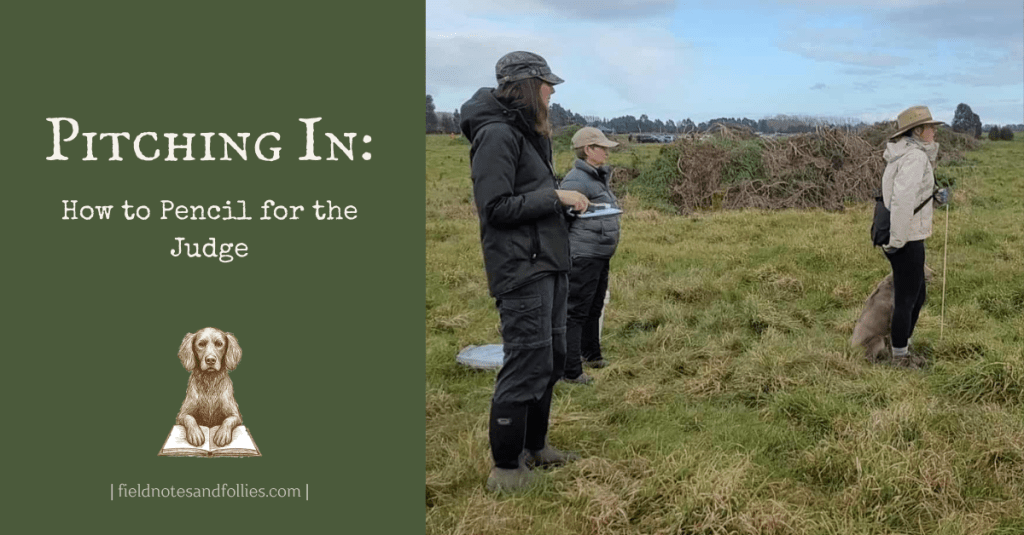
With my weeks and weekends about to become all-consumed by gundog trials, I thought I’d start a little mini-series of shorter blog posts. In this series, called Pitching In, I will cover topics aimed at helping out and being part of the gundog community because we all know it takes a village to run a good club.
Penciling was the first job I learnt to do as a newbie field trialist. Technically speaking, I wasn’t even a field trialist yet! I’d only had Hail a year and was just starting to think about training her up as a gundog. I had been talking to some lovely people in the world of gundogs, and they’d invited me out to watch a Pointer and Setter trial that was happening in North Canterbury.

I arrived at the trial, full of beans and keen to see what it was all about. I quickly realised that trials, at least in New Zealand, are run by the competitors. While that makes trialing a beautifully personal sport, it also means that it’s all hands on deck in terms of getting things done. After the pleasantries, I was approached and asked if I could pencil for the judge. Talk about being thrown in at the deep end!
After having the job explained, and feeling a worrying sense of responsibility wash over me, I followed the judge out onto the course. My initial nerves were quickly put to rest by the good nature of the judge. After the first run or two I settled into a rhythm and the day was a joy.
Penciling was the most wonderful way to experience my first ever gundog trial.
What is Penciling?
As penciler, your task is to scribe for the judge. You write down the points that are deducted from a dogs run for the judge as the run is happening. During the run, the judge will take points, for example one control, one speed, one finding, and your job is to mark them down on the score card. You might also be required to be a time keeper for each run.
How to Pencil?
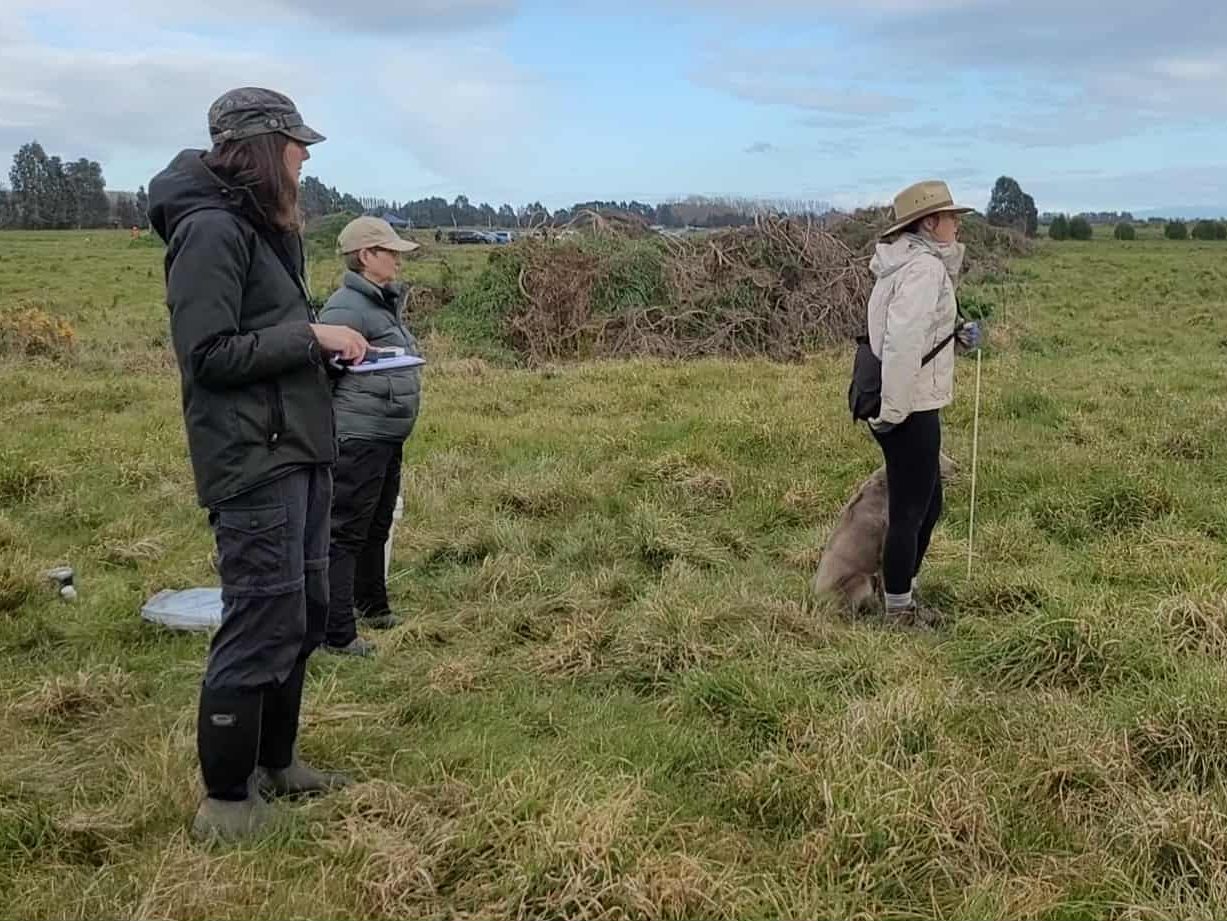
Penciling isn’t complicated, but it does require you to be paying attention during each run. Each dog running in the event will have a score card. Heel-Retrieve, and Pointer and Setter trials work an a deductive points system. Each dog starts with a maximum number of points, for example 100 points, and as the dog completes their run they may lose points for various errors or corrections.
The judge will quietly call out the points that are to be deducted from the different categories on the score card. For example dog-handler teams can lose points for poor marking, speed, delivery and style, among other things. Handlers can also lose points for use of control.
As the scribe, all you need to do is record the points that are to be deducted from the correct categories as they happen. We’ve all had runs that have been less than textbook, so it’s also a good idea to keep a running tally of how many points are left. I’ve definitely had cards where I’ve run out of points in one category and the judge has told me to put them in another one for good measure.
Why You Should Give Penciling a Go
Penciling is the best way to learn about the sport! You get to sidle up to the judge and have a front row seat to all of the action. From behind the peg you get to see what the handler sees. The arc of the birds as they leave the launchers, the lines the dogs take out and back, the minor (or major) mistakes that handlers make that cost them points. If you get a good judge they will often have a post run debrief with the pencilers to explain why they did or didn’t take points or how they would have expected a dog or handler to behave in a given situation. This is all incredibly valuable learning that you can implement in your own training.
Penciling is a great way to help out if you’re new because it doesn’t require any special skills. You get a taste of what it’s like to be at the peg without having the added pressure of running your own dog. It’s also a great way to introduce yourself to the club, make a few new friends and show that you’re willing to pitch in.
Field trials only happen because people pitch in. If you’re new, give penciling a go. You’ll learn heaps and be a huge help on the day. Next time, on Pitching In, I’ll cover laying blinds and etiquette in the field. Stay tuned!

 Field Notes & Follies
Leave a comment