
Living, adapting, and letting go of control with a chronically ill dog
You don’t ever think it’s going to happen to you. You’ve done you’re homework on your breed of choice. You know what genetic disorders to look out for. You’ve picked a great breeder who does all of the health testing to minimise the risks. The puppy you’ve picked has passed those tests with flying colours… and yet…
I know I’m not the only one living this reality right now. I did all the things any reasonable person would do to reduce the risk of getting a dog with a chronic disease.. and yet, it happened. Through no ones fault, but through the randomness of the genetic lottery, I have ended up with a dog that now requires lifelong medication to keep her happy and healthy.
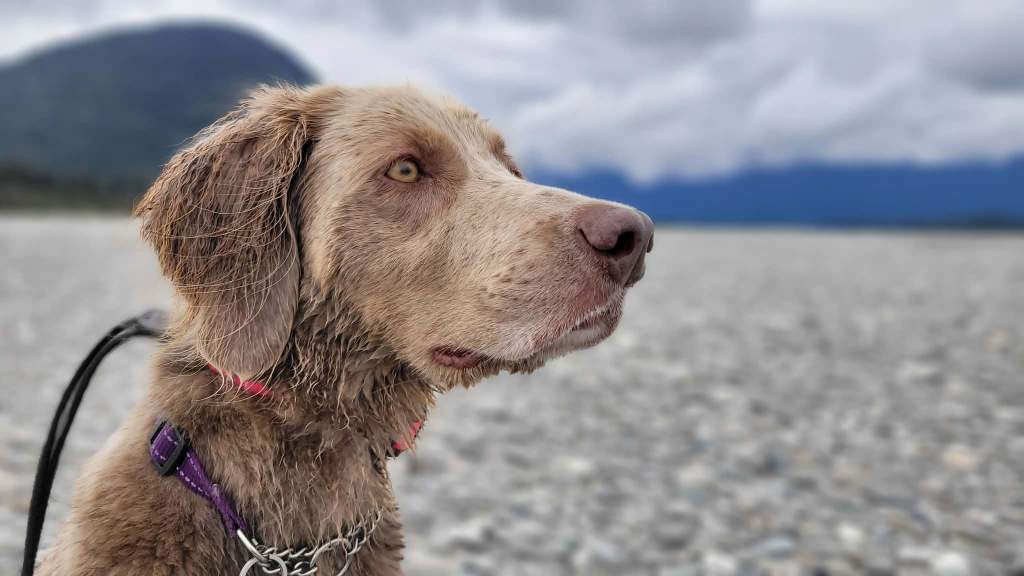
To look at Hail now, you wouldn’t think that just over a year ago, she almost died in the space of an hour.
With proper ongoing management and medication, she’s living a great life. One that I hope continues for many years to come. It’s taken us time to get here… and that’s what I want to talk about in this weeks post. If you want a more detailed rundown of how we got here, please check out my previous blog post The Difference a Year Makes.
I wanted to write this post for all the people out there that are living a reality similar to ours. Those of you with dogs that have chronic illnesses, those with dogs that have undergone major surgeries, those with uncertain futures.
Why This Should Matter to Everyone
I want to preface this post by saying that this isn’t a “please, feel sorry for me” post. I’ve had my own little pity party about it, I got over it, and I’m all good from here.
This posts aim is to share why it’s important for everyone to be aware of the realities of living with dogs that are chronically ill. You just never know if one day that might be you.
I hope to provide some honest insight into what it’s like to have to confront a very different life to the one you thought you’d live… and no, I didn’t think this would happen to me either!
Learning to be Okay with the Uncertainty
If you’re a regular reader here, you’ve probably picked up that I don’t do well with uncertainty. I need control and predictability to feel stable.
This experience, made worse by the fact that we still have no idea what the catalyst was, triggered the most epic doom spiral I think I’ve had to date in my life. The catastrophic sense of being out of control, set off an intense fear that anything and everything was out to get us.
This brought out one of the ugliest sides of my personality… micromanagement Em. In my defense, I was also dealing with a relationship break-up, selling a house, and selling a business… so things were pretty stressful on all fronts at the time!
Regardless, micromanagement was where my brain went to help me to feel safe. There were so many parts of Hail’s recovery and her illness that I couldn’t, and still can’t, control. To cope, my brain decided to fixate on anything (and I mean anything) that gave me a sense of power in a powerless situation.
My micromanagement showed up in a few ways that made life fairly unpleasant for me and my dogs at that time.
It stated small, with little things that seemed innocuous. I did a deep clean of the house and garden followed by an extensive search for anything that could be toxic for the dogs. I did this even though Histology had all but ruled out any sort of poisoning. I justified this by telling myself that even if that wasn’t the cause, I didn’t want there to be another incident… although I’m already a super cautious person, and I knew I’d done a check before I’d moved in only a few months prior.
Once I was on the slippery slope of controlling everything, my brain ran riot with it! I put all of my dogs into what was essentially a lockdown. Everyone was supervised all the time. Even with that, I became panicked every time they picked something up out on walks or in the garden. I wouldn’t even let them toilet alone in the garden for fear of something happening to them… and that was with my other two dogs, who weren’t sick! As you can imagine, exercising the dogs became an overwhelming task, too. Life was miserable.
Living in fear of all the things you really can’t control begins to eat away at you. I was second guessing myself, double and triple checking things over and over, like I couldn’t trust my own brain, even though I knew I could. I’ve never had OCD but, looking back, I could see elements of my behaviour that were probably fairly similar in their expression.
I was also getting panic attacks due to the stress. This wasn’t even linked to Hail’s drama. This was linked to trying to keep an eye on the two dogs I had that were fine! And what I realised was, in trying to keep control of all the littles things, I was actually losing control of everything.
Looking back, I wish I’d had more insight to check myself before it began to spiral. There were times I caught myself, times when I knew what I was doing was ridiculous, and also massively unsustainable. But I kept going with it because I shut my support people out. I went full hermit and allowed things to fester in my isolation. I didn’t want to hear people telling me that I needed to let things go. What did they know. It wasn’t their dog that was sick.
This is why I think this post is so important. If you’re in the trenches right now, and someone says that you have to let things play out, or that your dog still needs to have the freedoms to be a dog, please believe them.
You don’t have to send them out into the world carelessly, but if you’re like me, and you do everything by the book, that’s actually all you can do. There is no point worrying about the other unknown stuff, because you can’t do anything to change those things. And worrying doesn’t help you enjoy the moments you have with your dogs.
This was what eventually snapped me out of my doom spiral. I thought about how terrible I’d feel if the worst did happen to Hail (or any of my dogs), and she died in the next day or two. Her last days with me would have been beyond shit. Our last moments together would have been ruined by me.
I didn’t want that for us, so my focus then became quality of life. If she was going to die, I wanted her to have had the best care and the most fun that I could give her (within the constraints of post op recovery). That mind shift was enough to drive out my micromanagement gremlin for good.
Your New ‘Normal’
No one talks about the grief you feel when you’re confronted with a diagnosis of a chronic illness. In my experience, once I knew Hail was out of the woods from her operation, the grief I had was for the life that I felt she’d been robbed of. I figured that a chronically ill dog was going to be confined to a life of being a sickly couch potato… a fate worse than death for a Weimaraner from working lines!
As it turns out, this wasn’t the case at all. I will admit, there were definitely a few months immediately following the surgery and new medications that were very different from what we were used to. Unfortunately, I think you have to just ride those out as best you can.
My advice for surviving these times is to do things that make you and your dog happy:
- Invite people over if you don’t feel up to leaving the house.
- Plan to have some down time together where you’re both resting but in each others company.
- Get someone to come over and dog-sit if you want to go out but still want to have eyes on them while they recover.
Once you’re past that bit, try to find your ‘new normal’ as quickly as you can. One of the best bits of dog advice I’ve ever received is “start as you mean to go on“, thanks Rachael! Think about what you’d like the new normal to look like and just start living it.
For us, that’s been things like:
Tip #1: Auto-Shipping
Setting up online auto-ships for food has been a game changer. Hail has an extremely restricted diet. She is only allowed to eat Royal Canin Anallergenic dog food… no treats, nothing else! Setting this up did require a bit of nerdy dog maths to work out how long a bag of dog food would last us, but it’s completely squashed that stress from my life. And, it saves us a tonne of money, too!
Tip #2: Life-Proof Medication Schedule
Working out a medication schedule that fit with the rest of our lives. Hail is on two different medications, and she’s a ‘lifer’ for both. She has these twice a day, so that was an easy one to incorporate into her regular feeding times of breakfast and dinner. If you’ve got a mediation schedule that’s a little more demanding, how can you schedule it so it coincides with other daily events? Could you start a new event, like a short walk or a micro-training session, to help?
Tip #3: Practice What Matters
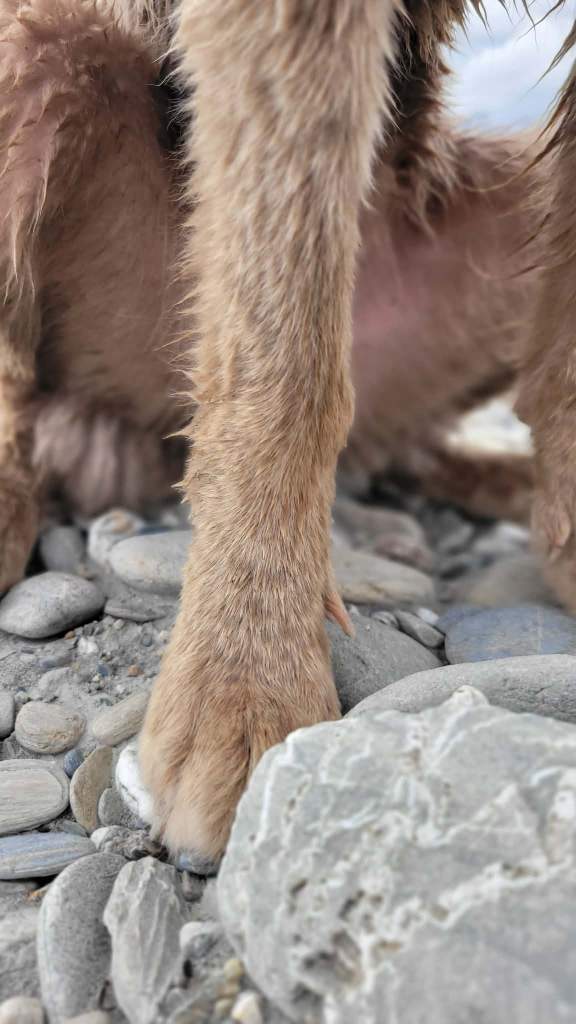
Practicing being handled. Hail has blood tests every six months to check that her meds are at the right level and all her organs are functioning like they should. She’s also had some other secondary issues, like ripped paw pads, as a result of medications and her illness. So, Hail and I regularly practice sitting still while being touched, touching her feet, ears, looking in her eyes, and checking her gums. This means that when she goes to the vet, she’s a delight and the whole experience is more enjoyable for everyone involved.
Once you get over the grief of your situation, you start to realise that the new normal probably doesn’t feel all that different to the old normal after a while. We’re pretty adaptable. Give it time. A routine that works for you will come out of the woodwork.
Managing the Cost
With the ever-growing cost of living being what it is, having a chronically ill dog is also a financial challenge. The extra vet visits, surgeries, blood tests, and medications all start to add up over time. And in some cases, that length of time can come on rather rapidly!
This is one of the toughest parts to talk about, because every person has their own unique financial situation. Whether we like it or not, our financials will put constraints on the type of care we are able to provide. This is such a deeply personal thing, and is probably the biggest cause of guilt that people feel when making choices about their dogs level of care. We aren’t all a bottomless pit of money, and sometimes those tough decisions have to be made.
While I would never judge someone for making a decision about their dogs’ care from a financial perspective, I also think it’s important to highlight that when you commit to getting a dog, you should think about a contingency plan… in the event that the worst happens. Honestly, if you’re going to struggle to pay for the cost of a puppy, or insurance, or dog food, do you really have the financial capability to care for that dog if an unexpected expense crops up?
That aside, I have got a few tips for how to bring down the additional costs associated with a chronically ill dog.
Tip #1: Do the Maths
First you need to do the maths. I’m not going to lie, this is not a fun exercise. When I did this for Hail, I cried after. It was partly the shock of seeing how the numbers boiled down, but it was also the realisation that this number isn’t likely to get any smaller as she gets older. But, as they say, knowledge is power. Now I know what I’m dealing with, I can get crafty about how I do things. And this brings me to my next tip…
Tip #2: Shop Around!
If I bought Hail’s food from a vet, it would cost me around $250 NZD for 8 kg! Yep, this shit is crazy expensive. But, because I’m not a Swiss bank, I hopped online and found that I could by the exact same food from an online pet shop for $180 NZD. Don’t get me wrong, it’s still expensive, but this saves me a considerable amount of money over the course of a year. You can often find the same for medications. If you get a script from the vet, you can use online vet stores to purchase some medications at a discounted rate. It doesn’t work for all meds, but it’s definitely worth a look.
Tip #3: Be Realistic
As I said earlier, Hail has to have blood tests every six months to check that she’s still on track to be alive in the next six months. I can’t really afford to skip this step altogether, but I can be a realist about it. Instead of doing a full blood panel and thyroid tests for somewhere in the region of $700 NZD, I can alternate between doing a full panel and a partial panel, which is only around $400 NZD. Again, I haven’t got myself a sugar daddy, so I need to be real about what’s likely to stretch my dollars a little further. Doing a full panel once a year is realistic for me because Hail’s condition has been relatively stable over the past year. Obviously, if something changed and I needed to reevaluate this, I could, but if things are humming along nicely, there’s no reason to do a full work up every six months.
The reality is, dogs with chronic illnesses are vastly more expensive to keep than dogs that don’t. Instead of being bitter about it, I have channeled that energy into finding crafty ways to bring the extra costs down to a figure that I can manage, even if I don’t like it. This worked for me because I’ve had a contingency plan in place from the day I started owning dogs that took into account that the worst might happen… some would call that lucky…
Quality of Life
The worst thing about having sick dogs is thinking about what happens if the worst happens. While Hail is currently living her best life, that might not be the case in six months, a year, or three years from now. I do count myslef lucky that her illness was caught in time, and that the amazing vet team at McMaster & Heap were able to save her life. But, I’m sure there will come a day when her health deteriorates, or her care becomes financially unsustainable and I’m going to have to make the toughest call.
I’ve had to think about this ahead of time, because I don’t want to get caught off guard. I’ve known too many friends who were unprepared to make that choice and ended up delaying that decision. The guilt that they felt, having not made the call sooner, is all the reason I need to make sure that I’m ready when that day comes.
Coming to terms with that, knowing that this day might come around much sooner than I’m okay with, has been hard. Cue lots of tears.
How I know I’ll be ready is because I’ve thought about the one question that matters the most – what is Hail’s quality of life like?
While her quality of life remains good, we’ll keep going. We have so much more we’d like to do together, both on and off the field. And, provided that she’s happy, her body can carry her and her state of mind is good, we’re going to fill our boots!
When that changes, when I can see a real deterioration in her, I’ll know it’s time.
The hard part is, that’s the easiest scenario I can think of. But the truth is, it’s not only her deterioration that might be her undoing. I’ve also had to come to terms with the fact that there may come a time when I can no longer afford to give her the level of care she needs to maintain a good quality of life. That’s the hardest scenario. The one every dog owner dreads thinking about. While I haven’t put a figure on it yet, it is something I’m acutely aware of…
Almost coming full circle, I have to remember that this isn’t something I can really control. When it’s her time, it’ll be her time, whatever the reason. Worrying about it doesn’t push that date out. It just robs us of the wonderfully precious time we have together.
Don’t Sweat the Small Stuff
So, with that rather morbid topic over, I’ve decided that until then, we give it everything we’ve got. We do all the adventures, we do the trials, we work within the limits… but we give her the best life a dog could ask for. She gets to run free, find birds, bring me dead stuff and hang out with us at every opportunity.
It’s taken time, but I now don’t sweat the small stuff. Hail is a dog, not a robot. She doesn’t know how sick she is, why her medications are so important, or that she’s not allowed to eat random stuff or counter surf! So, when she pinches a lamb steak off the bench, or steals salmon skin off one of the other dogs, I don’t cry about it… anymore!
This is the great thing about sick dogs. They teach us just how precious life is, and how it should be enjoyed… one walk, one cuddle, one retrieve at a time.

 Field Notes & Follies
Leave a comment